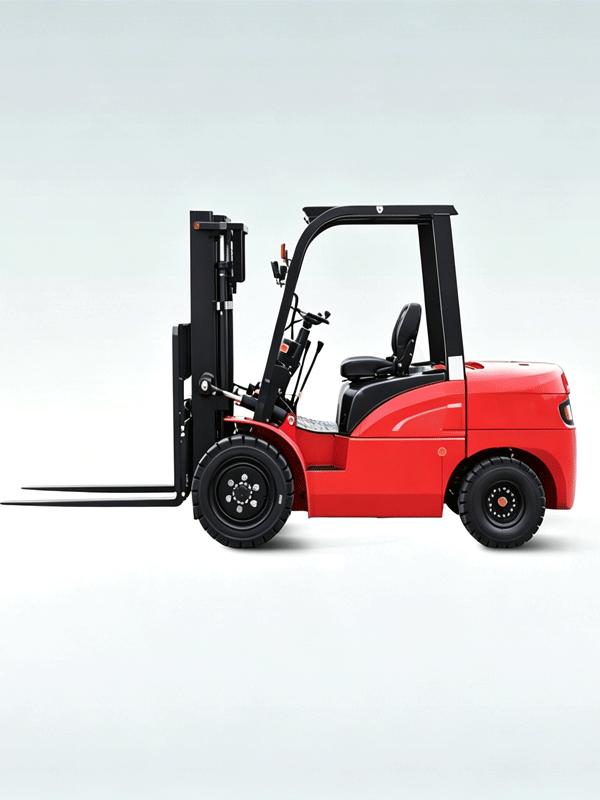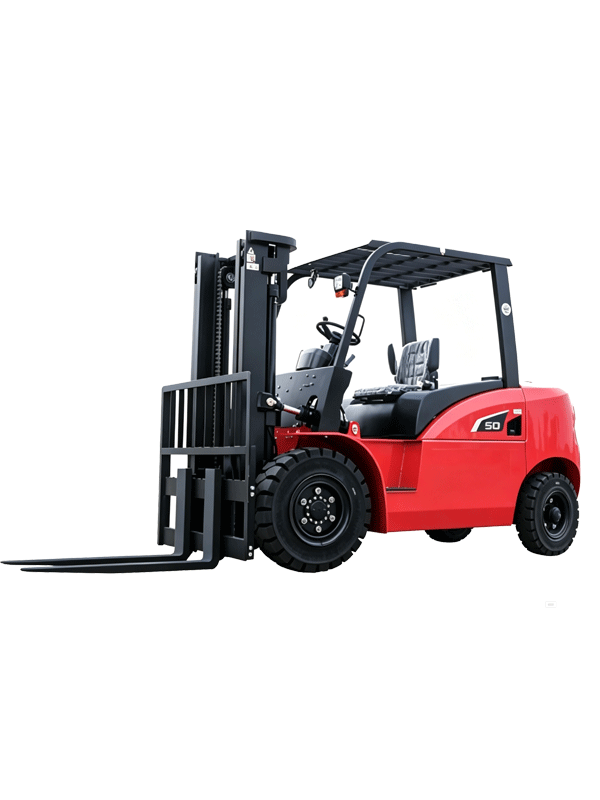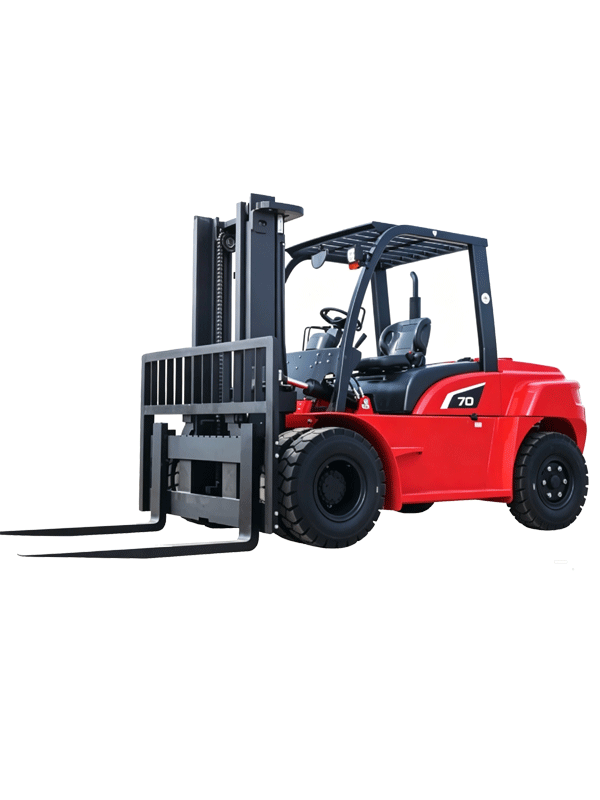
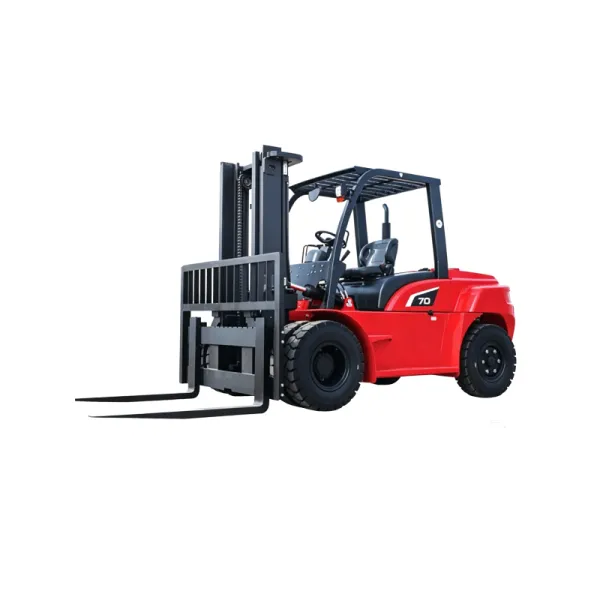
5–12 Ton Heavy-Duty Diesel Counterbalance Forklift
The 5–12 Ton G Series Heavy-Duty Diesel Counterbalance Forklift is designed for demanding material handling applications requiring high lifting capacity, strong traction, stable operation and reliable diesel power.
The series covers six models from 5,000 kg to 12,000 kg, including CPQD-G50, CPQD-G60, CPQD-G70, CPQD-G80, CPQD-G100 and CPQD-G120X.
With a 600 mm load center, up to 3,000 mm standard lifting height, heavy-duty forks, high ground clearance and powerful diesel engines, the G Series is suitable for steel, construction, manufacturing, machinery, logistics, timber and other heavy-duty material handling applications.
5–12 Ton Diesel Forklift Model Range
| Model | Rated Capacity | Load Center | Max. Lift Height | Max. Travel Speed |
|---|---|---|---|---|
| CPQD-G50 | 5,000 kg | 600 mm | 3,000 mm | 19/21 km/h |
| CPQD-G60 | 6,000 kg | 600 mm | 3,000 mm | 19/21 km/h |
| CPQD-G70 | 7,000 kg | 600 mm | 3,000 mm | 18/20 km/h |
| CPQD-G80 | 8,000 kg | 600 mm | 3,000 mm | 18/20 km/h |
| CPQD-G100 | 10,000 kg | 600 mm | 3,000 mm | 18/20 km/h |
| CPQD-G120X | 12,000 kg | 600 mm | 3,000 mm | 18/20 km/h |
The wide capacity range allows customers to select the appropriate forklift according to the actual cargo weight, load center and operating environment.
Technical Specifications
1. Capacity & Lifting Specifications
| Specification | Unit | G50 | G60 | G70 | G80 | G100 | G120X |
|---|---|---|---|---|---|---|---|
| Model | – | CPQD-G50 | CPQD-G60 | CPQD-G70 | CPQD-G80 | CPQD-G100 | CPQD-G120X |
| Power Type | – | Diesel | Diesel | Diesel | Diesel | Diesel | Diesel |
| Rated Load Capacity | kg | 5,000 | 6,000 | 7,000 | 8,000 | 10,000 | 12,000 |
| Load Center | mm | 600 | 600 | 600 | 600 | 600 | 600 |
| Battery | V/Ah | 24/100 | 24/100 | 24/100 | 24/100 | 24/100 | 24/100 |
| Max. Lift Height | mm | 3,000 | 3,000 | 3,000 | 3,000 | 3,000 | 3,000 |
| Free Lift Height | mm | 100 | 100 | 100 | 100 | 105 | 105 |
| Mast Tilt Angle, Front/Rear | ° | 6/12 | 6/12 | 6/12 | 6/12 | 6/12 | 6/12 |
2. Driving & Performance Specifications
| Specification | Unit | G50 | G60 | G70 | G80 | G100 | G120X |
|---|---|---|---|---|---|---|---|
| Max. Travel Speed, Loaded/Unloaded | km/h | 19/21 | 19/21 | 18/20 | 18/20 | 18/20 | 18/20 |
| Max. Gradeability, Loaded/Unloaded | % | 50/40 | 50/40 | 45/35 | 42/34 | 39/30 | 35/29 |
| Max. Traction Force | kN | 32/30 | 32/30 | 34/30 | 35/30 | 37/30 | 37/30 |
| Min. Turning Radius, Loaded/Unloaded | mm | 2550/2500 | 2550/2500 | 2610/2580 | 2670/2630 | 3030/2980 | 3230/3180 |
| Braking Distance, Loaded/Unloaded | m | 7/5 | 7/5 | 7/5 | 7/5 | 7/5 | 7/5 |
| Maximum Gradeability | % | 30 | 30 | 28 | 25 | 20 | 20 |
| Min. Ground Clearance | mm | 180 | 180 | 180 | 180 | 190 | 190 |
The G50 and G60 provide a maximum travel speed of 19 km/h under load and 21 km/h without load, while the larger models provide travel speeds up to 20 km/h without load.
The maximum gradeability varies according to model, reaching up to 50/40% for the G50 and G60 under the supplied test specifications.
3. Overall Dimensions & Chassis
| Specification | Unit | G50 | G60 | G70 | G80 | G100 | G120X |
|---|---|---|---|---|---|---|---|
| Overall Length Without Fork | mm | 3,480 | 3,480 | 3,580 | 3,830 | 4,340 | 4,540 |
| Overall Width | mm | 2,000 | 2,000 | 2,000 | 2,250 | 2,100 | 2,100 |
| Mast Height | mm | 2,400 | 2,400 | 2,500 | 2,500 | 2,650 | 2,650 |
| Overhead Guard Height | mm | 2,050 | 2,050 | 2,050 | 2,100 | 2,100 | 2,100 |
| Wheelbase | mm | 1,440 | 1,440 | 1,440 | 1,500 | N/A | N/A |
| Front Tread | mm | 1,600 | 1,600 | 1,600 | 1,800 | 1,800 | 1,800 |
| Rear Tread | mm | 1,470 | 1,470 | 1,470 | 1,470 | 1,600 | 1,600 |
| Maximum Steering Angle, L/R | ° | 42/42 | 42/42 | 42/42 | 42/42 | 42/42 | 42/42 |
The heavy-duty chassis is designed to provide a stable operating platform for high-capacity loads. Depending on the model, the overall width ranges from 2,000 mm to 2,250 mm, while front wheel tread reaches up to 1,800 mm.
The larger chassis dimensions of the G100 and G120X provide the structural foundation required for 10–12 ton load handling.
4. Tire Specifications
| Specification | Unit | G50 | G60 | G70 | G80 | G100 | G120X |
|---|---|---|---|---|---|---|---|
| Front Tire | – | 28×9-15 | 28×9-15 | 315/70-15 | 315/70-15 | 375/70-15 | 375/70-15 |
| Rear Tire L1 | – | 21×8-9 | 21×8-9 | 21×8-9 | 21×8-9 | 250-15 | 250-15 |
| Rear Tire L2 | – | 6.50-10 | 6.50-10 | 6.50-10 | 6.50-10 | 7.00-12 | 7.00-12 |
The large industrial tire configuration provides strong load-bearing capability and sufficient ground clearance for heavy-duty operations.
The minimum ground clearance is 180 mm for G50–G80 and 190 mm for G100–G120X.
5. Fork Specifications
| Specification | Unit | G50 | G60 | G70 | G80 | G100 | G120X |
|---|---|---|---|---|---|---|---|
| Fork Size (L×W×T) | mm | 1220×120×50 | 1220×120×50 | 1220×120×50 | 1220×150×70 | 1220×150×70 | 1220×150×70 |
The G50–G70 models use 1220 × 120 × 50 mm forks.
The G80–G120X models use heavier 1220 × 150 × 70 mm forks for higher-capacity material handling.
For specialized applications, fork dimensions and attachments should be selected according to the cargo dimensions, weight and load center.
6. Engine Specifications
G50 & G60
The CPQD-G50 and CPQD-G60 are equipped with a Quanchai 490BZ-C15C diesel engine.
| Specification | Unit | G50 | G60 |
|---|---|---|---|
| Engine | – | Quanchai 490BZ-C15C | Quanchai 490BZ-C15C |
| Maximum Power | kW/rpm | 55/2400 | 55/2400 |
| Maximum Torque | N·m/rpm | 190/1600 | 190/1600 |
| Cylinders | – | 4 | 4 |
| Displacement | L | 2.29 | 2.29 |
G70
The CPQD-G70 uses a YC4BJ115-480 diesel engine.
| Specification | Unit | G70 |
|---|---|---|
| Engine | – | YC4BJ115-480 |
| Maximum Power | kW/rpm | 65/2400 |
| Maximum Torque | N·m/rpm | 200/1600 |
| Cylinders | – | 4 |
| Displacement | L | 4.837 |
The engine specifications for the G80, G100 and G120X should be confirmed from the final engine configuration before publication.
7. Side Rollers
Side rollers are positioned above the main rollers.
When the forks are raised and the mast sections overlap, the side rollers help reduce lateral movement of the mast and forks.
This improves stability during elevated lifting operations and helps the operator position heavy loads more accurately during stacking.
8. Ergonomic Steering Wheel
The forklift uses a compact 320 mm diameter steering wheel with an adjustable ergonomic steering angle.
The design provides a comfortable grip and responsive steering control while helping reduce operator fatigue during extended working hours.
9. Digital Instrument Panel
The G Series uses a digital instrument panel with CAN bus communication technology.
The human-machine interface provides clear operating information and allows the operator to monitor the forklift's operating condition in real time.
The system supports:
Operating status monitoring
Fault alarms
Fault diagnosis
Clear digital information display
This makes daily operation and troubleshooting more convenient.
10. Intelligent Operator Design
The integrated control system is designed according to ergonomic principles.
The operating handle and electrical switches are centrally arranged to provide convenient and intuitive control.
A standard USB fast-charging interface is also provided for operator convenience.
11. Hydraulic System
The hydraulic system is designed to provide accurate control of lifting, lowering and mast tilting.
The hydraulic lines use 24° cone sealing to improve sealing reliability.
Hydraulic oil passes through a secondary filtration process before reaching the hydraulic actuators. This helps improve oil cleanliness and protect hydraulic components.
The optimized hydraulic filtration system can help extend the service life of hydraulic components.
12. Stamped Engine Hood
The stamped engine hood provides a robust structure and helps improve the overall durability of the forklift.
The hood is designed with a large opening angle, providing convenient access to internal components during daily inspection and maintenance.
13. Central Electrical Box
Electrical components such as fuses and relays are centrally arranged in the electrical box.
The electrical box uses sealing protection to help reduce the effects of dust and moisture.
The centralized electrical layout makes inspection, troubleshooting and maintenance more convenient.
14. Spacious Operator Area
The operator area provides increased legroom while reducing the entry step height.
The design combines:
Anti-slip step
Wide spring-assisted handrail
Increased legroom
Lower entry height
This provides more convenient access and a more comfortable operating environment.
15. Wide-Visibility Mast
The optimized mast structure provides an improved forward field of view.
The mast uses C-section steel and welded structural components designed to provide good bending characteristics and structural strength.
The mast tilt angle is 6° forward and 12° backward.
16. Large-Opening Engine Hood
The internal layout has been optimized to provide easier access to major service components.
The large opening angle of the engine hood makes daily inspection, lubrication, oil filling and maintenance more convenient.
17. Two-Stage Air Filtration
The diesel engine uses a two-stage air purification system consisting of:
Paper Air Filter + Air Pre-filter
The two-stage filtration design helps improve intake-air filtration and protect the engine when operating in dusty working environments.
This is especially useful for:
Construction sites
Steel yards
Outdoor warehouses
Industrial plants
Material storage yards
18. H-Type Electrical Wiring Layout
The electrical wiring uses an H-type layout.
The wiring harnesses and electrical components are arranged in an organized manner, making inspection and maintenance easier.
The flat wiring arrangement helps reduce unnecessary wiring and provides a cleaner electrical installation.
19. Maintenance-Friendly Steering Axle
The G Series uses an integrated steering axle with tapered bearings in the kingpin assembly.
The steering axle is designed to provide:
Strong impact resistance
Flexible steering
Stable travel
Good vibration absorption
Reduced maintenance requirements
Selected bearing adjustment areas are designed for maintenance-free operation.
Applications
The 5–12 ton heavy-duty diesel counterbalance forklift is suitable for a wide range of demanding material handling applications.
Steel Industry
Handling steel plates, structural steel, pipes, metal products and other heavy materials.
Construction
Handling building materials, machinery, concrete products and heavy construction components.
Manufacturing
Moving heavy machinery, production equipment, molds, components and finished products.
Machinery Industry
Handling industrial equipment, mechanical components and large machinery.
Logistics & Freight
Loading and unloading heavy cargo and transporting large industrial loads.
Timber Industry
Handling timber packages, logs and other heavy wood products.
Industrial Yards
Suitable for outdoor material handling in factories, storage yards and loading areas.
How to Choose the Right 5–12 Ton Diesel Forklift?
When selecting a heavy-duty diesel forklift, rated capacity is not the only factor to consider.
Customers should consider:
1. Load Weight
Determine the maximum actual weight of the cargo.
2. Load Center
The standard load center of this series is 600 mm. If the load center is greater than the rated value, the actual allowable lifting capacity may be reduced.
3. Lifting Height
The standard maximum lifting height is 3,000 mm. Higher lifting requirements require an appropriate mast configuration.
4. Cargo Dimensions
The cargo length, width and height affect fork selection and operating stability.
5. Working Environment
Consider whether the forklift will operate indoors, outdoors, on ramps, on uneven surfaces or in dusty environments.
6. Attachments
Special applications may require different forks or attachments.
FAQ
What lifting capacities are available?
The series includes 5,000 kg, 6,000 kg, 7,000 kg, 8,000 kg, 10,000 kg and 12,000 kg models.
What is the load center of the G50–G120X?
The supplied specification lists a 600 mm load center for all models in this series.
What is the maximum lifting height?
The standard maximum lifting height is 3,000 mm.
What is the difference between the G50 and G60?
The G50 has a rated capacity of 5,000 kg, while the G60 has a rated capacity of 6,000 kg.
Both use the Quanchai 490BZ-C15C engine with a maximum power of 55 kW / 2400 rpm.
What is the largest model?
The CPQD-G120X is the largest model in this series, with a rated capacity of 12,000 kg.
Is this series suitable for outdoor applications?
Yes. The diesel powertrain, heavy-duty chassis, large industrial tires and 180–190 mm ground clearance make the series suitable for many outdoor industrial applications.
Can the forklift handle steel and construction materials?
Yes. The 5–12 ton capacity range is designed for heavy material handling applications including steel, construction materials, machinery and industrial products.
Can the lifting height be customized?
Different mast configurations and lifting heights can be discussed according to the customer's application.
Can attachments be installed?
Yes. Suitable forklift attachments can be selected according to the cargo type, weight, dimensions and application.
How should I choose between 5 ton, 8 ton and 12 ton?
Choose according to the maximum cargo weight, load center, lifting height, cargo dimensions and working environment.
For example:
5 ton: CPQD-G50
6 ton: CPQD-G60
7 ton: CPQD-G70
8 ton: CPQD-G80
10 ton: CPQD-G100
12 ton: CPQD-G120X
For loads close to the rated capacity, provide the actual cargo weight and load dimensions so the appropriate model can be selected.
Request a Quote
Looking for a 5–12 Ton Heavy-Duty Diesel Forklift?
Whether you need a 5 ton, 6 ton, 7 ton, 8 ton, 10 ton or 12 ton diesel forklift, the G Series provides high-capacity solutions for demanding industrial material handling.
Tell us:
Required lifting capacity
Cargo weight
Cargo dimensions
Load center
Required lifting height
Working environment
Required attachments
Our team can recommend the suitable model and provide a detailed quotation.
Contact us today for model selection, technical specifications and pricing.